
Three Power Drills for Jiu-Jitsu: Med Ball Toss, Step-Up Jump, Broad Jump
Jun 28, 2021Every grappler wants to be more powerful, more athletic, and faster on the mat. Power is strength expressed quickly — the difference between a heavy sweep and a sweep that lands before your opponent can react. Three drills cover most of what a grappler needs.
One rule before you start: power work is destroyed by fatigue. Keep the reps low, rest fully between sets, and stop the moment the reps slow down. A tired power drill is just conditioning with worse technique.
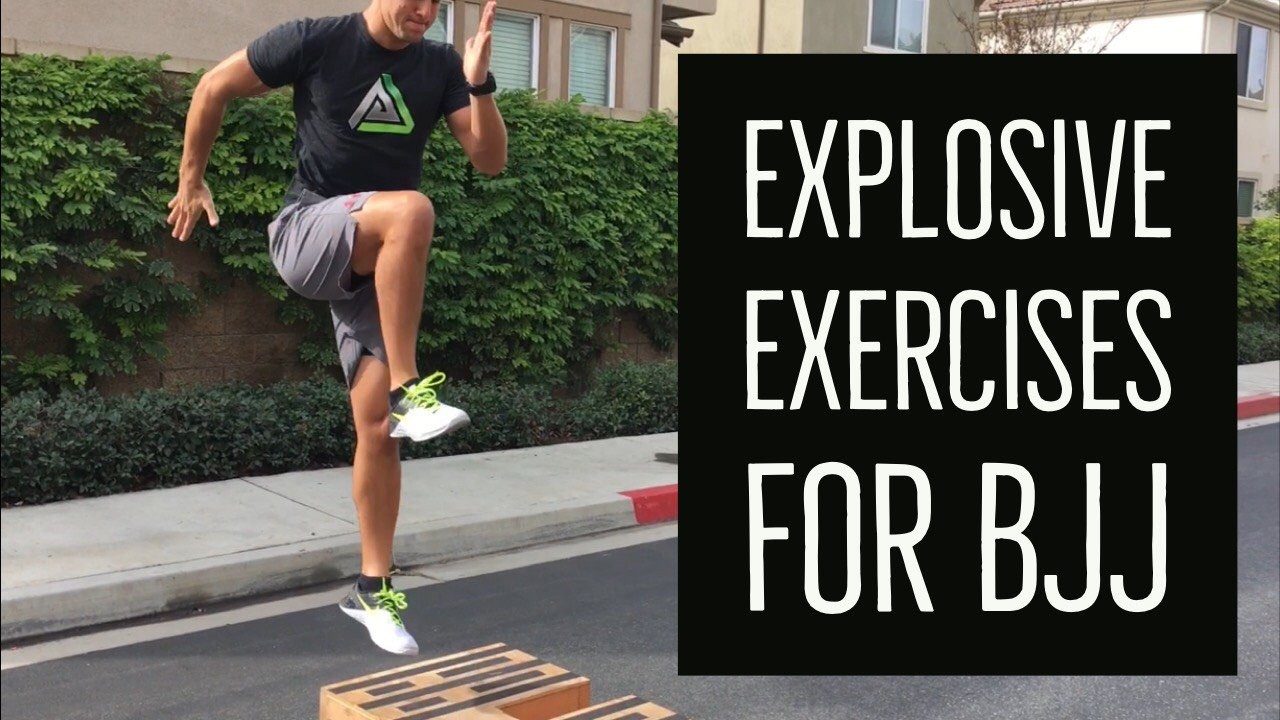
Three power drills for jiu-jitsu — coach PJ Nestler.
1. Med ball overhead toss
This one goes in almost every combat athlete's program because it develops power through the entire body at once.
- Use a 6–20 pound medicine ball.
- Keep the reps low.
- Legs and hips drive the force, not the arms.
- Get full extension overhead, but do not hyperextend through the low back.
2. Sprinter step-up jump
A single-leg drill, so it challenges one leg at a time — which is how you actually move in a scramble.
- Use a 12–18 inch box, not much higher.
- Weight on the top leg.
- Opposite arm in front.
- Develop the pattern first.
- Start with small jumps before jumping for height.
- Control the landing and stay under control.
- Add intensity with a weight vest or other load once the pattern is clean.
3. Staggered-stance broad jump
For any competitive grappler who starts on their feet and hunts takedowns. It builds the horizontal power those movements need.
- Start in a staggered stance or a normal wrestling stance.
- Sink down into position and drive forward, not up.
- Land in a stable, athletic position.
- Reset fully between reps.
How to program them
| Drill | Sets and reps | Rest |
|---|---|---|
| Med ball overhead toss | 4–5 sets of 3 | 90 seconds to 2 minutes |
| Sprinter step-up jump | 3 sets of 4 per side | 90 seconds |
| Staggered-stance broad jump | 4 sets of 3 | 2 minutes |
Put these at the start of a session, right after the warm-up, while you are fresh. Two power days a week is plenty, and one is enough during a competition block.
If the last rep of a set is slower or shorter than the first, the set is over. Long rest is not laziness here — it is the whole point of the drill.
Where this fits
This is one movement out of a short list. The full set, organized by what each one fixes on the mat, is in the jiu-jitsu exercise library. For the structure around it — how many days, how to phase it around competition, how hard to push in a camp week — read BJJ strength and conditioning: the complete guide.
Related: medicine ball drills for grapplers · hang clean progressions · B-stance squat.
Questions
Do I need to be strong before doing these?
Some baseline strength helps, but these drills are safe to start early because the loads are low. Build them alongside your strength work rather than after it.
Can I do these on a mat day?
Yes, before you roll, not after. Fresh legs or skip it.
How long before I notice a difference?
Six to eight weeks of consistent low-volume work is a reasonable window for a noticeable change in how fast you move.
Are Olympic lifts better?
Not better, different. They load the same triple extension pattern but need coaching and time to learn. If you want them, start with the clean progressions.
Hands that hold on when the rest of you is done.
Start with the free Grappler’s Iron Hands 14-day challenge — hands, wrists, and forearms built to keep their grip deep into a hard roll. Or step into THE PHYSICAL GRAPPLER, built around mat-specific strength, grip, and conditioning.
Start Iron Hands FreeGet THE PHYSICAL GRAPPLERGrip last. Win late.