Advanced Landmine Exercise: Uppercut
Jun 29, 2021By Jorge Bonnet
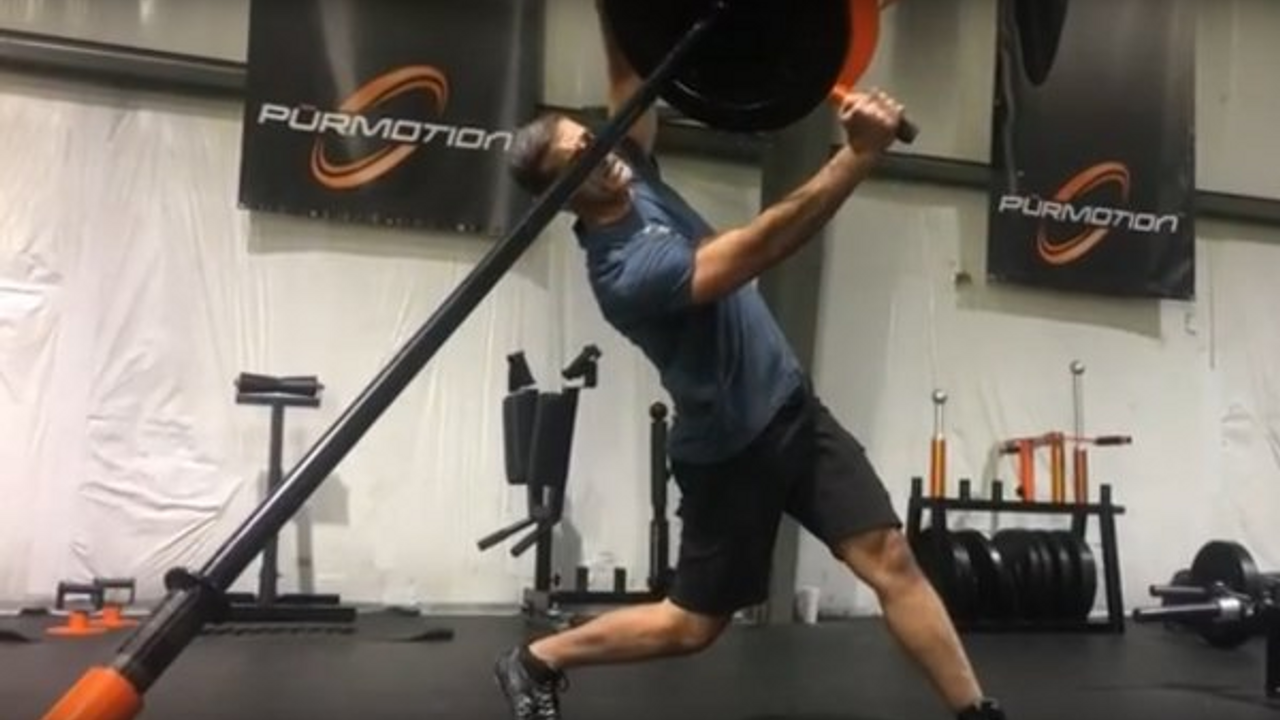
Most people use a landmine for three things: press, row, lunge. Maybe a little anti-rotation work. That leaves the most useful part of the movement on the table — the bottom half of the circle, where a punch actually lives. In the video below, Jorge Bonnet shows how he loads that bottom arc with the Omega attachment from PurMotion, turning the landmine into a whole-body rotation drill that makes you stabilize through the hips, trunk and shoulders at the same time.
Start with the full framework
This article covers one piece of the picture. For the full 8-week plan that turns strength into a harder punch, read How to Train Your Punching Power: The 8-Week Plan.
Landmine Exercise: Uppercut
The Omega's design lets you hold a familiar “bicycle grip” while you run the Bear Fight and Uppercut patterns. Both are whole-body rotation drills. Nothing about them is isolated — you feel them from the floor to the fist.
Learn more about the PurMotion Omega here -->
Why a Landmine Uppercut Carries Over to Punching
A punch is not an arm movement. Force starts in the floor, runs through the hip, gets passed across the trunk, and leaves at the hand. Most gym work trains that chain in pieces — squats for the legs, planks for the trunk, presses for the arms. Then nothing ties them together.
The landmine uppercut ties them together. You are driving from the back foot, rotating the hip, resisting the bar's pull across your trunk, and finishing with the arm on an upward arc. That is the same order of operations as a real uppercut, just slowed down and loaded so you can feel where you leak.
Two things it exposes fast:
- A trunk that gives up. If your ribs flare or your low back takes over, the bar tells you immediately. You cannot fake it.
- A back foot that does nothing. Most people arm the movement. If the heel is dead, the whole thing turns into a shoulder exercise.
How to Do It
- Load one end of a barbell in the landmine. Stand in a staggered stance, lead foot forward, roughly a fist-width off the line of the bar.
- Hold the end of the bar at chest height on the same side as your back foot.
- Drive the back heel down and turn the hip through. Let the trunk pass the force along — do not initiate with the arm.
- Finish on an upward arc, arm ending short of lockout, ribs stacked over the pelvis.
- Lower it under control. The return is where most of the trunk work happens.
Sets and Reps
Treat it as a power movement, not a conditioning movement. Quality dies fast and sloppy reps teach you nothing.
- Learning it: 3 sets of 6 per side, light. You are buying the pattern, not the load.
- Building it: 4 sets of 4 per side, moderate weight, moving fast. Full rest between sets.
- Where in the session: after your main lift, before conditioning. Never when you are already cooked.
Three Mistakes That Kill It
- Going too heavy. Once the load beats the pattern, you stop rotating and start leaning. If your shoulders are climbing toward your ears, drop the weight.
- Standing square. A square stance takes the hip out of it. Stagger the feet or you are just doing a standing press on an angle.
- Chasing reps. Twenty tired reps build a habit you do not want in a fight. Stop the set when the speed drops.
No Omega Attachment? Do This Instead
Most people reading this do not own an Omega, and that is fine. The pattern matters more than the hardware. Grip the bare end of the barbell, or wrap a towel around it for a thicker handle. You lose some of the smooth bottom arc, but the hip-to-fist sequence is the same, and the trunk still has to hold the line.
A cable stack at chest height works too. Half-kneeling or staggered stance, single arm, same upward finish. Slightly less honest than the landmine because the cable does not punish a lazy back foot as hard, but it will do the job.
Where It Fits in the Week
This is an accessory, not a centerpiece. Two exposures a week is plenty — one heavier day at 4x4, one lighter day at 3x6 focused on speed. Put your heavy pressing and squatting first, then this, then whatever conditioning the week calls for. If you are inside fight week, cut the load and keep the pattern.
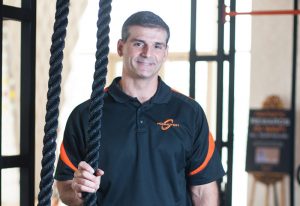 Jorge is the founder of PurMotion. His experience as a 5-time Olympic athlete fueled his passion to change the way the world thinks about fitness and has led to the creation of a new training modality complete with new movements, products and programming. In today’s podcast, we discuss Jorge’s athletic past and how he transitioned into fitness, manufacturing and education.
You Also Might Like…
Build Rotational Strength with the Samurai
Trunk Rotation Exercise Using the Mop Bar
Episode #89 with Jorge Bonnet from PurMotion
Boxer training tools
Stop guessing. Start training with a plan.
Start free with the rules that help you stop stacking hard work badly, or get the complete boxing strength and conditioning system built around real boxing volume.