
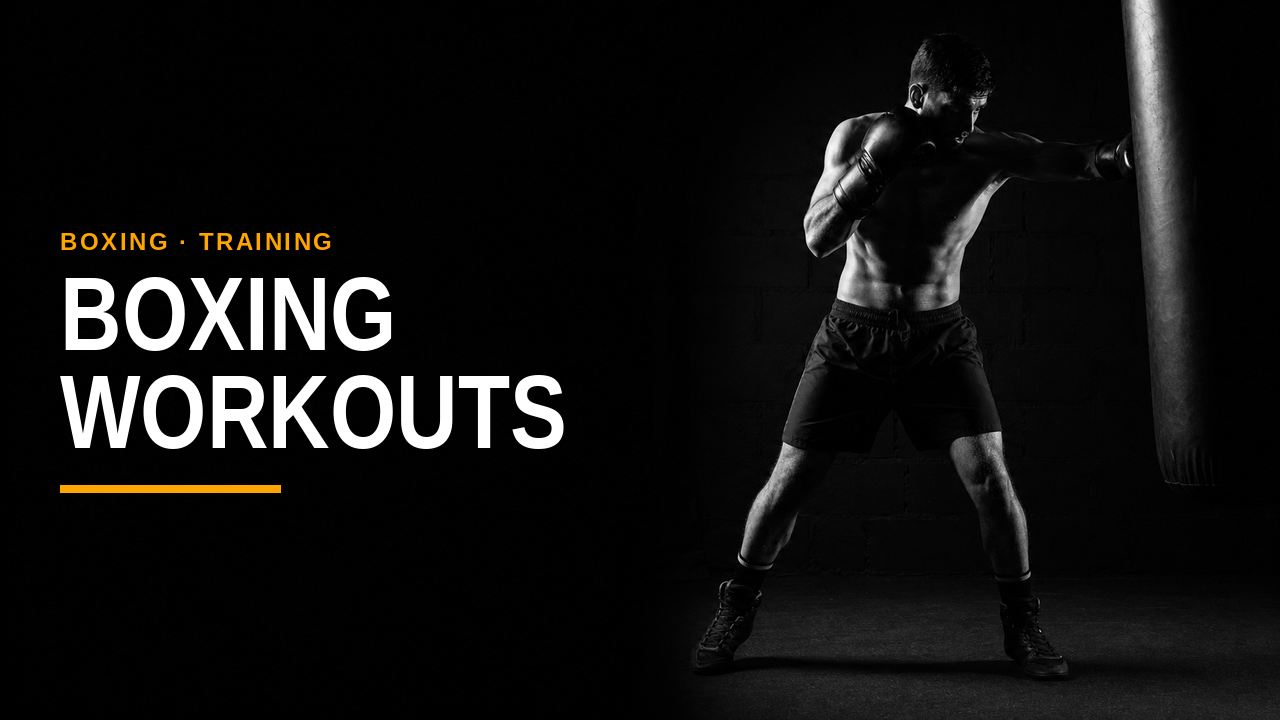
Boxing Workouts: Building Strength, Speed, and Endurance
Feb 14, 2023Search "boxing workouts" and you get the same list every time. Shadowbox. Hit the bag. Jump rope. Do some push-ups. Plank.
Start with the full framework
This article covers one piece of the picture. For how movement, conditioning, strength, power, and fight-camp load fit together for a boxer, read Boxing Strength and Conditioning: The Complete Guide.
That's not a workout. That's a list of things boxers do.
A workout has a job. It has an order, a load, a rest period, and a reason it comes on Tuesday instead of Thursday. Without those, you're just accumulating fatigue and calling it training. Most guys who "train hard" for boxing are doing exactly that — and then wondering why round four still falls apart.
This is the PHYSICAL breakdown: what a boxing workout actually has to accomplish, the exercises that do each job, and how to lay them out in a week alongside your boxing sessions.
The five jobs of a boxing workout
Everything you do outside the gym should serve one of these. If an exercise doesn't, cut it.
- Push the floor away harder. Punch power starts at the feet. Legs and hips, not arms.
- Transfer it through the trunk. A leak between the hips and the shoulder is a punch that lands soft.
- Survive the hands. Wrists, fingers, forearms. Hurt hands end camps faster than anything else.
- Keep the shoulders working. Punch volume is a shoulder endurance problem before it's a lung problem.
- Repeat it for three minutes, then do it again. Round repeatability. Not general fitness.
Notice what's missing. Nothing on that list is about looking like a fighter. Our training isn't about looking fit — it's about being dangerous.
Job 1: Push the floor away harder
Every punch you throw is a leg action first. If your legs are weak, your ceiling is low no matter how clean your technique is. This is the single most under-trained area in boxing gyms, because it happens in a weight room and boxing coaches are — correctly — focused on the ring.
The exercises that matter:
- Trap bar deadlift — 3–5 sets of 3–5. The safest way to get a boxer genuinely strong from the floor. Neutral grip, easy on the back, hard to do badly.
- Rear-foot-elevated split squat — 3 sets of 6–8 per leg. You fight on one leg at a time. Train that way.
- Step-up, mid-shin height — 3 sets of 8 per leg. Builds the drive pattern you actually use stepping in.
- Hip thrust or 45-degree back extension — 3 sets of 8–12. Glutes are the engine and most guys can't find theirs.
Two things people get wrong here. First, they skip it because they're scared of getting slow and heavy — that's a myth, and we've covered the speed-versus-strength question in detail. Second, they go too heavy too often. Three to five hard sets, twice a week, is plenty. More on whether boxers should lift heavy and on why leg strength drives ring performance.
If you want the glute work specifically, here are three smarter glute exercises for punching power.
Job 2: Transfer it through the trunk
Your trunk isn't there to look good. It's there to stop energy from leaking on its way from the floor to your fist. That means rotation under load, and it means resisting rotation when someone tries to turn you.
Crunches don't do this. Neither do Russian twists done fast with a 10-pound plate.
- Med-ball rotational throw into a wall — 4–6 sets of 3–5 per side. Throw it like you mean it. Full speed, full rest. This is the closest thing to a punch you can load.
- Landmine rotation — 3 sets of 6–8 per side, controlled. Owns the range the throw happens in.
- Half-kneeling cable press or Pallof hold — 3 sets of 20–30 seconds per side. Anti-rotation. Boring and necessary.
- Loaded carry, one side only — 3 sets of 30–40 yards per side. Trunk, grip, and shoulders in one movement.
Full detail on the trunk in the role of core strength in boxing, and if you want the mechanics of where power actually comes from, read why some fighters punch harder than others.
Job 3: Survive the hands
Nobody plans for this until their hand hurts. Then it's the only thing they think about. Wrists, knuckles, thumbs, and forearms take the impact of every session you've ever done, and almost nobody trains them on purpose.
- Rice bucket work — 8–10 minutes, 2–3x per week. Open-hand digs, closes, rotations, extensions. Cheapest hand insurance there is.
- Wrist roller — 3 sets down and back. Builds forearm endurance in the exact position a wrist collapses.
- Fat-grip or towel hangs — 3 sets of 20–30 seconds. Grip strength that carries into everything.
- Banded finger extension — 2 sets of 15–20. The other direction. Balance the gripping you already do.
Full protocol in wrist and hand strength for boxers.
Job 4: Keep the shoulders working
When your hands drop in round five, that's usually the shoulders quitting, not your lungs. Punch volume is an endurance demand on a small set of muscles, and it's a durability demand on a joint that takes a beating from being held up for 30 minutes at a time.
- Chin-ups or neutral-grip pull-ups — 3–4 sets to two reps short of failure. The best upper-body exercise a boxer can do.
- One-arm row — 3 sets of 8–10 per side. Pull-to-push ratio in a boxer should lean toward pulling.
- Half-kneeling press, one arm — 3 sets of 6–8 per side. Overhead strength without loading the spine.
- Band pull-apart and face pull — 2–3 sets of 15–20. Cheap insurance for the back of the shoulder.
- Shoulder-endurance holds — light plates or bands, arms in guard position, 3 rounds of 45–60 seconds. Ugly, specific, effective.
Job 5: Round repeatability
This is where most boxing conditioning goes wrong. Guys run five miles, or they do a random 20-minute circuit until they're on the floor. Neither one builds the thing a boxer needs: the ability to work hard for three minutes, recover in one, and do it again without falling off.
Get better, not just tired. That's the whole point.
Three pieces, in this order over a training block:
- Base engine. 2–3 sessions a week of easy, conversational work — 30–45 minutes. Rope, bike, incline walk, easy shadowbox. Low intensity on purpose. This is the foundation everything else sits on and it's the part people skip because it feels too easy.
- Repeat power. Short, hard, full recovery. 10–15 seconds of maximum output, 60–90 seconds rest, 8–12 rounds. Hill sprints, bike sprints, hard bag flurries. The goal is that round 12 looks like round 1.
- Round repeatability. 3-minute work blocks, 1 minute rest, 3–6 rounds. Mixed output — bag, rope, throws, carries. This is the last piece to add and the closest to a fight.
Footwork is conditioning too, and it's more specific than any treadmill. See boxing footwork drills that build power and shadowboxing for conditioning. For how much of this you actually need, read how much cardio boxers need and the full guide to conditioning for boxing.
Where plyometrics fit
Jumping work belongs in a boxing program, but it belongs early in a session, fresh, in low volume, with real rest. Not as a finisher when you're already cooked. Ten to twenty hard contacts is a full dose. Thirty box jumps for time is a way to get hurt.
Details in plyometrics for your boxing routine.
The week: a real boxing workout plan
This assumes you box 3–4 days a week. Boxing comes first — the weight room supports it, never the reverse. Lift on the same day as boxing, after boxing, or at minimum six hours apart.
| Day | Boxing | Physical work |
| Mon | Technical + bag | Lower strength: trap bar deadlift, split squat, hip thrust, one-side carry |
| Tue | Sparring or hard bag | Hands only: rice bucket, wrist roller, finger extension |
| Wed | Off or light | Base engine: 35–45 min easy rope, bike, or incline walk |
| Thu | Technical | Power + upper: med-ball throws, chin-ups, one-arm row, half-kneeling press, Pallof |
| Fri | Bag + pads | Repeat power: 10 x 12 sec hill or bike sprint, 90 sec rest. Hands work after. |
| Sat | Sparring | Nothing. Sparring is the session. |
| Sun | Off | Easy 30 min walk or rope. Real rest. |
Two hard weight-room days. One easy engine day. One repeat-power day. Hands twice. That's it. If that looks like less than you're doing now, that's the point — your goal isn't to train the most, it's to peak at the right time.
Two sessions written out
Monday — lower strength (about 45 minutes)
- Warm-up: 5 min rope, then hip and ankle work
- Trap bar deadlift — 4 x 4, rest 2–3 min
- Rear-foot-elevated split squat — 3 x 8 each leg, rest 90 sec
- Hip thrust — 3 x 10
- Suitcase carry — 3 x 40 yards each side
Thursday — power and upper (about 45 minutes)
- Warm-up: 5 min rope, band pull-aparts, shoulder prep
- Med-ball rotational throw — 5 x 4 each side, full rest between sets
- Chin-ups — 4 sets, two reps short of failure
- One-arm row — 3 x 10 each side
- Half-kneeling one-arm press — 3 x 7 each side
- Pallof hold — 3 x 25 sec each side
The mistakes that cost boxers the most
- Training to exhaustion every session. Training to exhaustion isn't a plan. It's a mistake. Hard days should be hard and easy days should actually be easy.
- Skipping the weight room out of fear. Getting strong doesn't make you slow. Getting heavy makes you slow, and that's a nutrition decision, not a barbell decision.
- Circuit-training everything. Strength needs rest between sets. If you're supersetting your deadlift into burpees, you're doing conditioning and calling it strength.
- Ignoring the hands until they hurt. Ten minutes twice a week prevents months off.
- No easy work at all. Every session at 8 out of 10 leaves you with no base and no top end.
More on this in common strength training mistakes boxers make, and if you have questions about the conditioning side specifically, we answered a stack of them in the boxing conditioning Q&A.
Adjust it for your style
A pressure fighter who throws 80 punches a round has a different problem than a counterpuncher who throws 30 and moves. The swarmer needs more round repeatability and more shoulder endurance. The out-boxer needs more repeat power and more leg durability for all that movement.
Figure out which one you are in the 5 types of boxers explained, then weight the plan above toward the job your style demands most.
Start here
You don't need more information. You need a system, run for long enough to matter. Pick the week above, run it for six weeks, and keep two numbers: your trap bar deadlift for four reps, and how you feel in the last round of sparring. If both move, the plan is working.
Train smart, fight hard.
Stop guessing at your boxing workouts.
Start with the free Boxer Training Rules Cheat Sheet — the 10 rules that decide whether your work outside the ring helps or hurts. Or step into The PHYSICAL Boxer, the full strength and conditioning system built around the demands of the ring.
Get the Free Boxer Cheat SheetSee The PHYSICAL BoxerTrain to outlast, outwork, and overwhelm.