
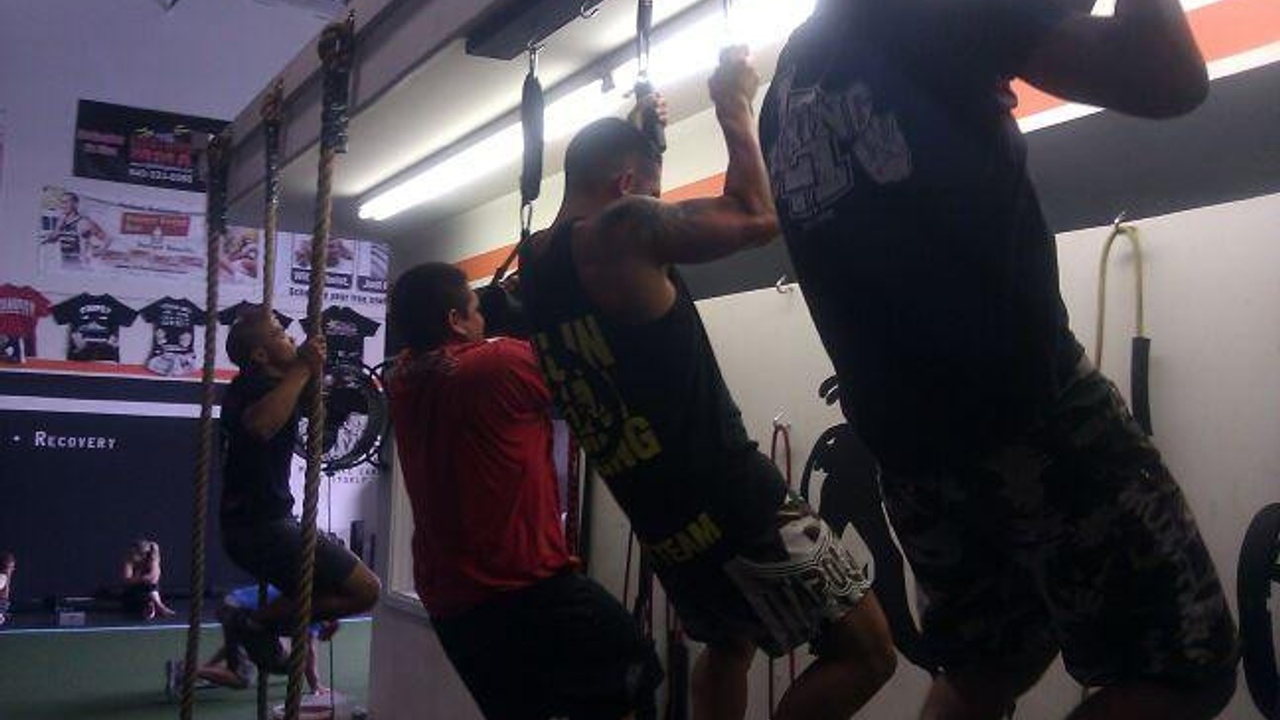
Three Pull-Up Variations for BJJ That Build the Grip You Actually Use
Jun 21, 2021Jiu-jitsu and wrestling are pulling sports. You pull, hold, and control for the length of a match, and the athlete whose grip fails first usually loses. Pull-ups are the best pulling exercise you have — but the standard version leaves the most useful part out.
A regular pull-up is done on a straight horizontal bar. That is one grip you never encounter in competition. Nobody hands you a smooth steel bar to hold onto. Change the implement and the same reps start building the grip you actually use.
Three variations that transfer
1. Rotating or clock-style grips
These handles almost perfectly mimic grabbing a wrist. They load the entire chain of pulling muscles while the hand works in the position it works in during a match. That translates to hand fighting on the feet and to controlling a wrist on the ground.
2. The gi grip
Athletes and coaches have used this for years and it is still one of the best options available. Throw a gi over the bar, or buy a purpose-made gi grip, and do work. Holding cloth is completely different from holding a bar — it puts far more stress on the hand and fingers. Practice it as a lapel, as a sleeve, and in whatever other grips you actually fight for.
3. Rope
Like the clock grip, a climbing rope puts the hand in the same position as grabbing an opponent's wrist. Rope pull-ups, rope rows, and isometric holds all work. Climbing without using your legs is one of the more honest grip tests in the gym.
How to program them
| Goal | Sets and reps | Notes |
|---|---|---|
| Pulling strength | 4–5 sets of 3–6 | Add weight once bodyweight is easy |
| Grip endurance | 3 rounds of max-effort holds | Gi or rope, 30–60 second holds |
| Volume in the off-season | 5 sets of 8 with the gi | Lower load, more time under tension |
Common mistakes
- Only ever using the bar.
- Kipping. If you are training pulling strength, control the rep.
- Half range of motion. Full hang to chin over the bar.
- Never adding load. Bodyweight pull-ups stop building strength once you can do fifteen of them.
If your hands go before your lungs do in a hard roll, grip is your bottleneck — not conditioning. Fix the hands first.
Where this fits
This is one movement out of a short list. The full set, organized by what each one fixes on the mat, is in the jiu-jitsu exercise library. For the structure around it — how many days, how to phase it around competition, how hard to push in a camp week — read BJJ strength and conditioning: the complete guide.
Related: the grip strength guide for fighters and grapplers · 30 grip exercises · loaded carry variations.
Questions
Should I stop doing normal pull-ups?
No. Keep them as your loadable strength lift and add gi or rope work for the specific grip demand. Most athletes do best running both.
How many pull-ups should a grappler be able to do?
Eight to ten clean bodyweight reps is a reasonable floor. Past that, add load rather than chasing higher rep counts.
No-gi athletes too?
Yes. Rope and rotating grips are arguably more relevant for no-gi than the gi version, since you are gripping wrists and limbs rather than cloth.
Do towel pull-ups count?
They do. A towel over the bar is a cheap gi grip substitute and brutal on the hands.
Hands that hold on when the rest of you is done.
Start with the free Grappler’s Iron Hands 14-day challenge — hands, wrists, and forearms built to keep their grip deep into a hard roll. Or step into THE PHYSICAL GRAPPLER, built around mat-specific strength, grip, and conditioning.
Start Iron Hands FreeGet THE PHYSICAL GRAPPLERGrip last. Win late.